
Research peptides with transparent lab documentation
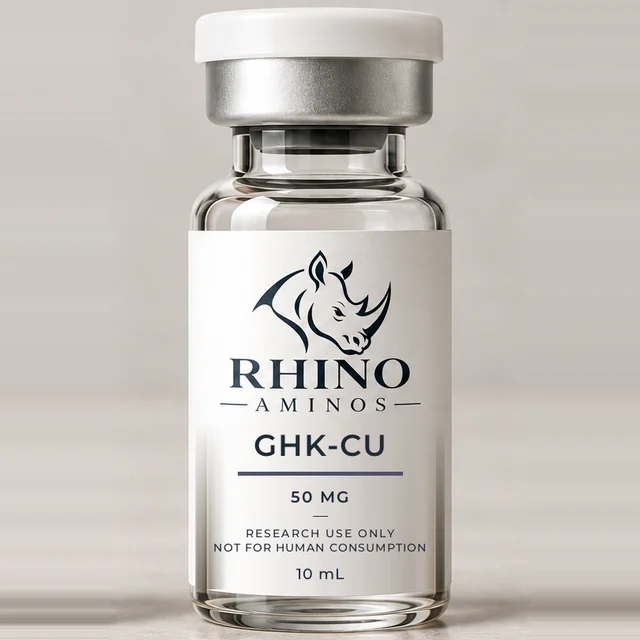
Rhino Aminos supplies lyophilized research peptides and laboratory compounds for analytical and in-vitro study. Orders ship from US-based fulfillment, with lab documentation published as it becomes available.
Shop Now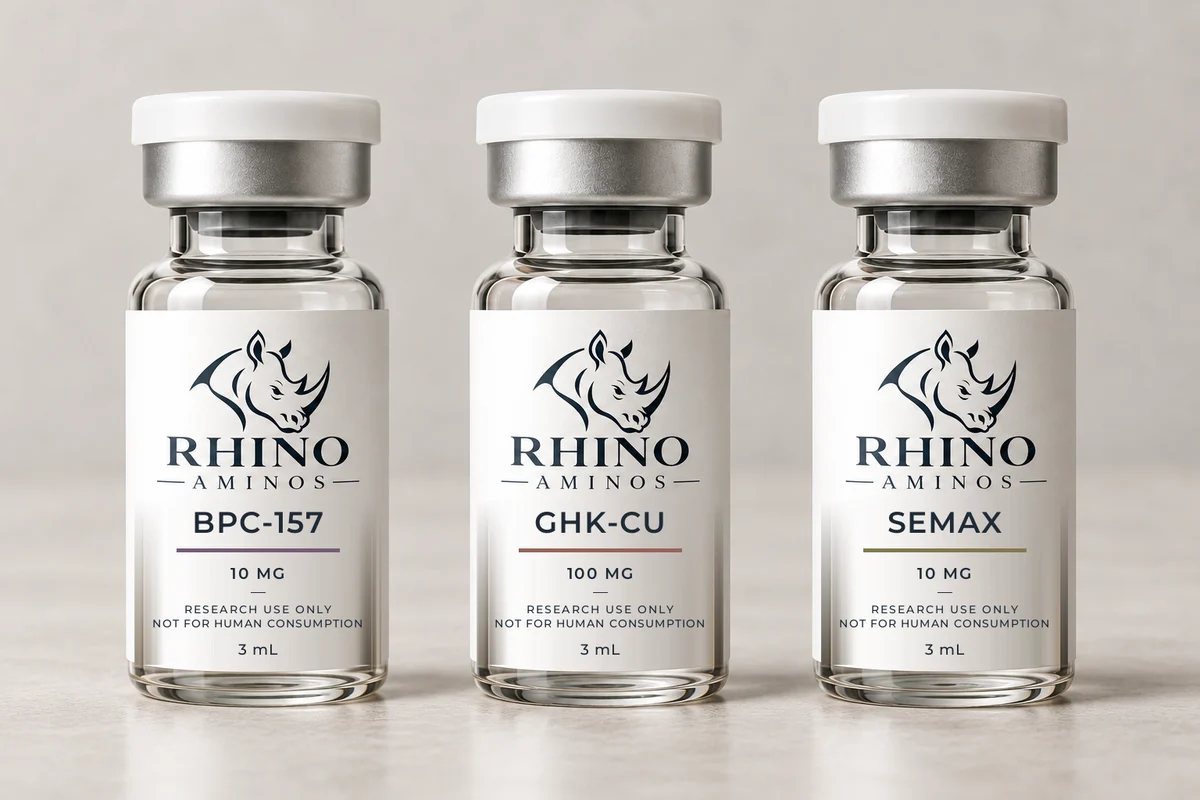
Who we are
Setting a higher bar for research peptide quality
Good science starts with reliable inputs. When the identity or purity of a compound is uncertain, results become difficult to reproduce, compare or defend.
Rhino Aminos was founded to give laboratories a dependable source of carefully tested peptide materials, backed by clear product data and responsive fulfillment. Our catalog spans receptor, cellular and neuropeptide research compounds.
Every product is sold exclusively for laboratory research. Through third-party testing, transparent documentation and attentive service, we aim to make sourcing research materials predictable from first order to reorder.
Read MoreBuy research peptides online
Our Best Sellers
All Products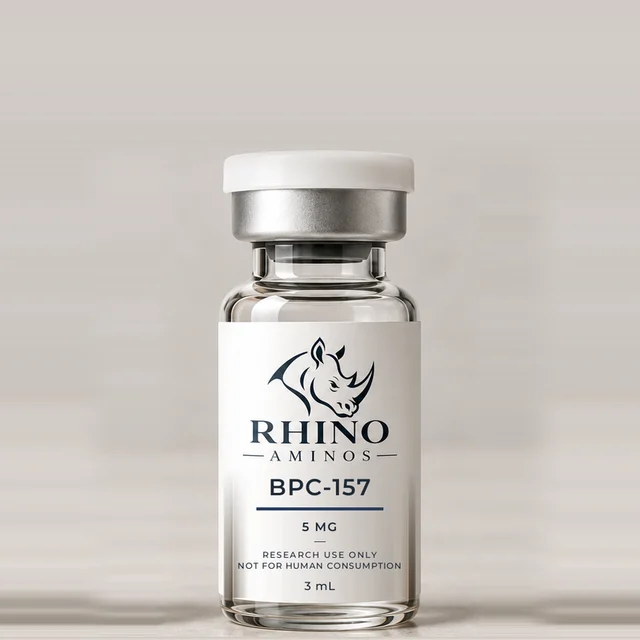
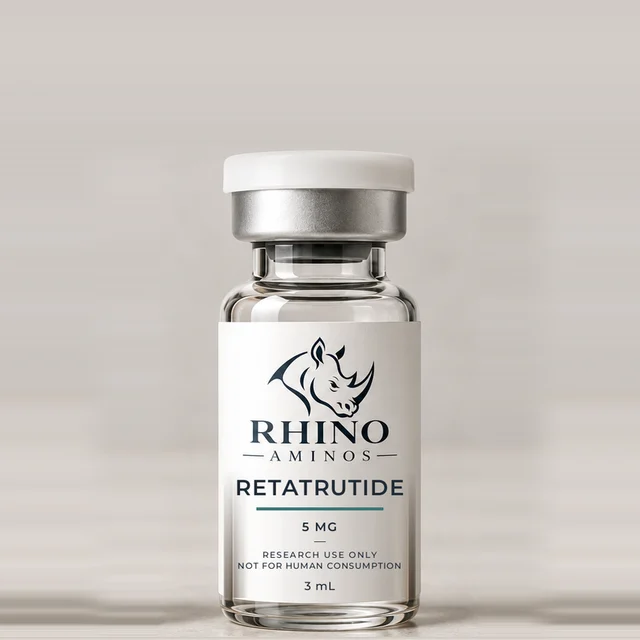
Research Purposes Only.
Peptides are short chains of amino acids studied for their roles in cellular signaling and biological regulation.
NOT FOR HUMAN CONSUMPTION. FOR RESEARCH PURPOSES ONLY.
Why Researchers Trust Rhino Aminos
Third-Party Testing
Independent HPLC and mass spec reports published as they become available.
Lot Numbers
Vials are labeled with a lot number for documentation requests.
US-Based Fulfillment
Packed and shipped domestically with tracking.
Strict Handling Standards
Cold, sealed and light-protected from receipt to dispatch.
Research-Only Sales
Sold exclusively for laboratory research. No usage guidance.
faq
Have a question?
What does peptide purity mean?
Purity is the share of a sample that is the intended peptide sequence, as measured by HPLC. Higher purity means fewer unknown variables in a laboratory experiment.
Why are research peptides supplied lyophilized?
Freeze-drying removes water, which helps a peptide stay stable in storage and transit until a laboratory is ready to reconstitute it for analysis.
How should vials be stored on arrival?
Keep sealed vials cold, dry and away from light. Lot-specific storage notes appear on the label and certificate of analysis.
What should I check before ordering?
Look for third-party HPLC and mass spec data, a lot number that matches a published certificate, and a supplier that sells for research use only.
Why does batch documentation matter?
Documentation lets you trace each vial to its test results so your methods section and data can be reproduced and audited.
What is the difference between a single peptide and a blend?
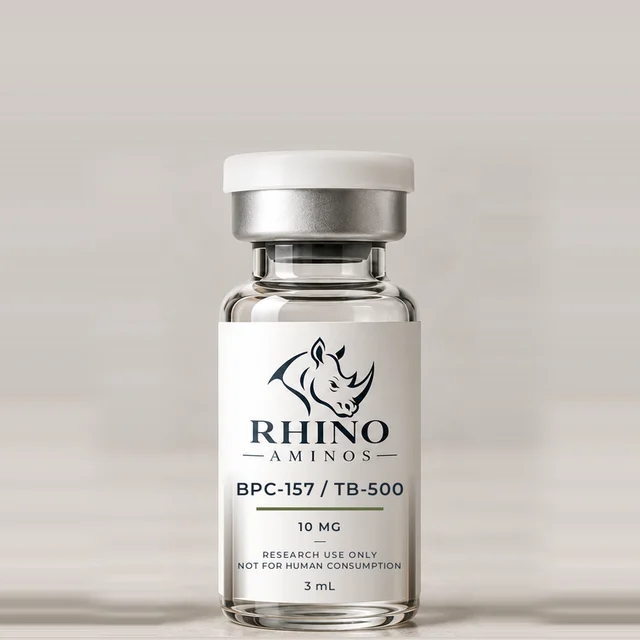
A single peptide contains one sequence. A blend combines two sequences in one vial, and each is identified in the lot's test report.
Are blends tested to the same standard?
Blends are documented the same way as single peptides. Test reports are published on our COA page as they become available.